
|
|
|||
Pravda Digital Archive (DA-PRA) (1912 to present) |
Kontakt/Bestellung
Contact/Order: info@digento.de 
|
|
Online |
|
|
Inhalt :: Content Online-Service mit Zugang zur sowjetischen Tageszeitung "Pravda" ab 1912 im kombinierten Volltext- und Imageformat. Die "Pravda" war und ist das wichtigste Verkündungsorgan der sowjetischen bzw. russischen kommunistischen Partei. Updates: jährlich. |
 |
|
Verlag :: Publisher Infoteka |
|
|
Preis :: Price Preise auf Anfrage / Prices on request |
|
|
Das Angebot richtet sich nicht an Verbraucher i. S. d. § 13 BGB und Letztverbraucher i. S. d. PAngV. |
|
|
Bestellnummer bei digento :: digento order number 107029 |
|
|
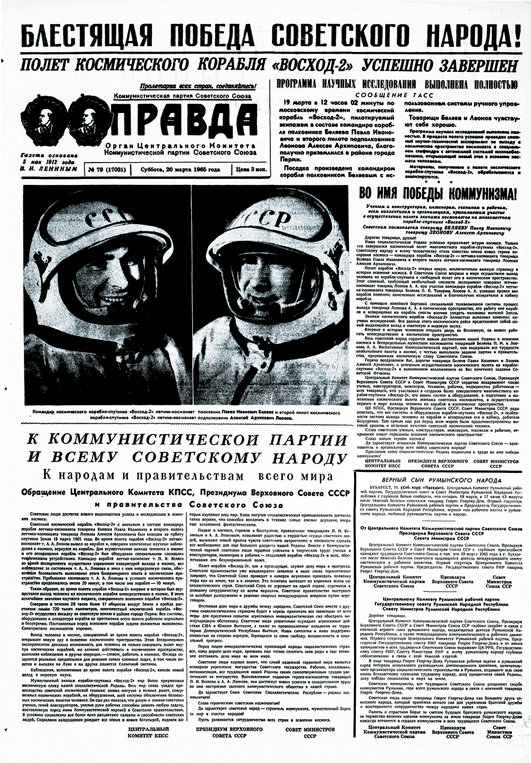
Verlagsinformation :: Publisher's information Pravda (Правда, Truth) was the official voice of Soviet communism and the Central Committee of the Communist Party between 1918 and 1991. Founded in 1912 in St. Petersburg, Pravda originated as an underground daily workers’ newspaper, and soon became the main newspaper of the revolutionary wing of the Russian socialist movement. Throughout the Soviet era, party members were obligated to read Pravda. Today, Pravda still remains the official organ of the Communist Party of the Russian Federation, an important political faction in contemporary Russian politics. In its early years, Pravda was subjected to constant persecution, fines, penalties, and prohibitions by the government. To avoid censorship and forced closures, the name of the newspaper changed eight times. In 1914 when the Russian Empire entered World War I, the Russian government moved to close down all subversive newspapers and military censorship was reimposed. After February 1917, when Tsar Nicholas II was deposed and replaced by the Provisional Government, Pravda became the official organ of the Bolshevik Central Committee and was allowed to reopen. When Lenin strongly condemned the Provisional Government and editorials in Pravda called the government “counter-revolutionary,” Pravda was once again subject to censorship and was forced to change names, as in tsarist times. When the Bolsheviks seized power during the October Revolution in 1917, Pravda became the official publication of the Soviet Communist Party. Pravda’s primary role was to deliver the official line of the Central Committee of the CPSU, and the newspaper remained the official voice of Soviet communism up until 1991, when Boris Yeltsin signed a decree closing it down. After the collapse of the USSR, nationalist and communist journalists intermittently published a print newspaper and an online newspaper under the name Pravda. Today, Pravda represents the oppositional stance of the Communist Party in the Russian Federation. The Pravda Digital Archive contains all obtainable published issues of the newspaper from 1912 on, totaling over 31,000 issues and over 169,000 pages. The archive offers scholars the most comprehensive collection available for this title, with an additional year’s worth of content available for purchase on an annual basis. The archive features full page-level digitization, complete original graphics, and searchable text, and is cross-searchable with numerous other Infoteka digital resources. Why Pravda Is Important to Researchers Today Pravda has been a newspaper of record since the dawn of the Soviet era and remains a prominent news source in today’s Russia. With the Pravda Digital Archive and ist 100+ years of valuable primary-source material, researchers now have the means to search through the chief chronicle of Russian and Soviet history, from the beginnings of the Russian Revolution through World War II, the Cold War, the fall of the Soviet Union, and everything in between. Just as news articles can subtly reveal changes in society, Pravda delivers insight to cultural and historical changes during ist publication through the entire Soviet era and beyond. As the Soviet state newspaper and central source of information and education, Pravda offered well-written articles and analyses on science, economics, cultural topics and literature, as well as communist theory. Conceived for the mass proletariat, Pravda was accessible to everyone and was the premiere example of a new style of mass media and official literary Russian. Lenin, as leader of the Bolshevik Party, wanted a newspaper to air differences and debates, reporting not only on local struggles, but also presenting commentary on the central political and theoretical questions facing communism. As an important contributor to the newspaper, Lenin wrote articles and provided direction to the editors. Pravda significantly shaped public opinion through ist mass reach, using militant slogans, tales of heroic feats of production, and denunciation of class enemies. Average Soviet workers were also able to voice their opinions in the pages of Pravda. They wrote to the newspaper with reports on daily life or complaints about shoddy consumer goods, public wrongs, or difficulties with bureaucracy. Many of the articles publicized labor activism and exposed the working conditions in Russian factories.
Key Stats
|
|
