
|
|
|||
The Picture Post Historical Archive, 1938-1957 |
Kontakt/Bestellung
Contact/Order: info@digento.de 
|
|
Online |
|
|
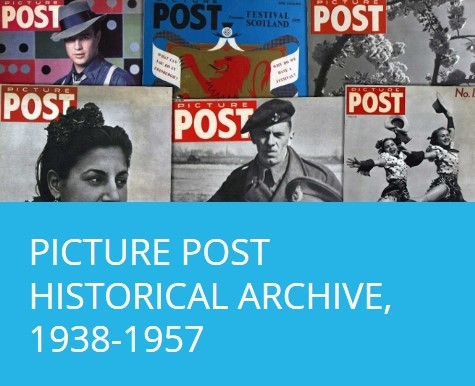
Inhalt :: Content Online-Service mit Zugang zu sämtlichen Ausgaben der "Picture Post" im Volltext- und Faksimileformat mit insgesamt rund 40.000 Seiten. Die "Picture Post" war eine bekannte fotojournalistische Zeitschrift in Großbritannien, die 1938 von Stefan Lorant gegründet wurde und bis 1957 erschien. Sie galt als ein Pionier des Fotojournalismus. |
 |
|
Verlag :: Publisher Gale Cengage |
|
|
Preis :: Price Preise auf Anfrage / Prices on request |
|
|
Das Angebot richtet sich nicht an Verbraucher i. S. d. § 13 BGB und Letztverbraucher i. S. d. PAngV. |
|
|
Bestellnummer bei digento :: digento order number 107053 |
|
|
Verlagsinformation :: Publisher's information The complete archive of the Picture Post from ist first issue in 1938 to ist last in 1957 - all digitized from originals in full colour. Picture Post's innovative use of photojournalism captured the imagination of the British people. In the era before television, it became the window on the world for ordinary people, bringing the major social and political issues of the day into popular consciousness.
Users can browse and search more than 38,000 pages and 95,000 articles online, gaining remarkable insight into a crucial period of twentieth-century history -- from the stormy years leading up to World War II to the first decade of the Cold War. An invaluable resource for students, teachers, and researchers of media, journalism, history, and photography, the Picture Post is also a heritage collection, providing excellent, highly visual primary source material for family and local history researchers. For users that already have access to other newspapers in Gale's online collection, such as the Illustrated London News Historical Archive and The Times Digital Archive, the collection provides additional avenues and in-roads into research of the period. The Picture Post's liberal, anti-Fascist, populist editorial stance, coupled with candid 35mm photography by a stable of talented photographers, was a runaway success from its first issue. Circulation reached 1.7 million within its six months, and readership was estimated at 80 percent of the British population during the war years.The magazine turned its lens on the major national and international social and political issues of the day, bringing into sharp focus:
|
|
