|
|
|||
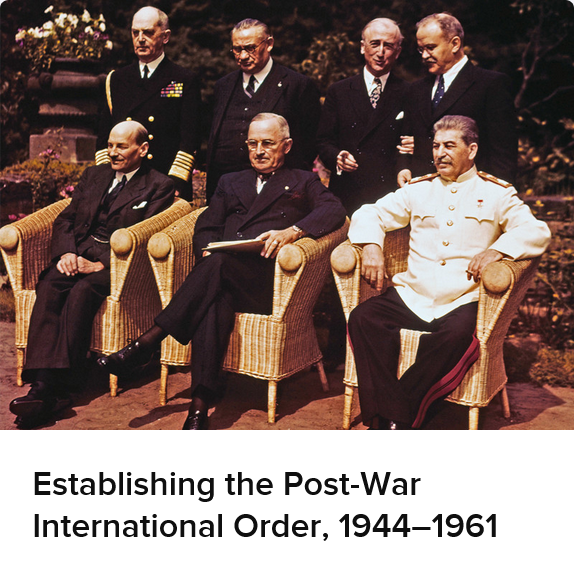
Establishing the Post-War International Order, 1944–1961 |
Kontakt/Bestellung
Contact/Order: info@digento.de 
|
|
Online |
|
|
Inhalt :: Content Online-Service mit Zugang zu einer Sammlung von Primärquellen, die dokumentiert, wie nach dem Zweiten Weltkrieg die politischen, wirtschaftlichen und militärischen Grundpfeiler der heutigen Weltordnung unter britischer Mitwirkung (und Perspektive) geschaffen wurden. Die Sammlung bietet einen Einblick in die Entstehung und Arbeit der wichtigsten multilateralen Institutionen und Abkommen dieser Ära:
|
|
|
Verlag :: Publisher Microform Academic Publishers |
|
|
Preis :: Price Preise auf Anfrage / Prices on request |
|
|
Das Angebot richtet sich nicht an Verbraucher i. S. d. § 13 BGB und Letztverbraucher i. S. d. PAngV. |
|
|
ISBN/ISSN 978-1-85117-339-6 Bestellnummer bei digento :: digento order number 10735102 |
|
|
Verlagsinformation :: Publisher's information This collection, curated in association with The National Archives (UK), provides an unparalleled insight into the political, economic, and military foundations of the post-war international order. The materials, which are diverse in nature, cover a wide range of subject matter, shedding light on the perspectives of various state and non-state actors during periods of both cooperation and conflict. The United Nations (UN), Marshall Plan, World Bank, International Monetary Fund (IMF), General Agreement on Tariffs and Trade (GATT), North Atlantic Treaty Organisation (NATO), and European Economic Community (EEC), to name but a few examples, are all accounted for. In addition to diplomatic files relating to key organisations, agreements, and events, records of global commodity prices, including gold, oil, and food, feature heavily. Most of the documents are derived from the annals of the British Board of Trade (i.e. BT 64), Cabinet Office (i.e. CAB 128), Foreign Office (i.e. FO 371), and Treasury (i.e. T 274). Brought together here for the first time, these files are intended for use by academics working across the humanities and social sciences, from History and International Relations, to Economics and International Law. |
|