|
|
|||
Nash Sovremennik Digital Archive (1933 to present) |
Kontakt/Bestellung
Contact/Order: info@digento.de 
|
|
Online |
|
|
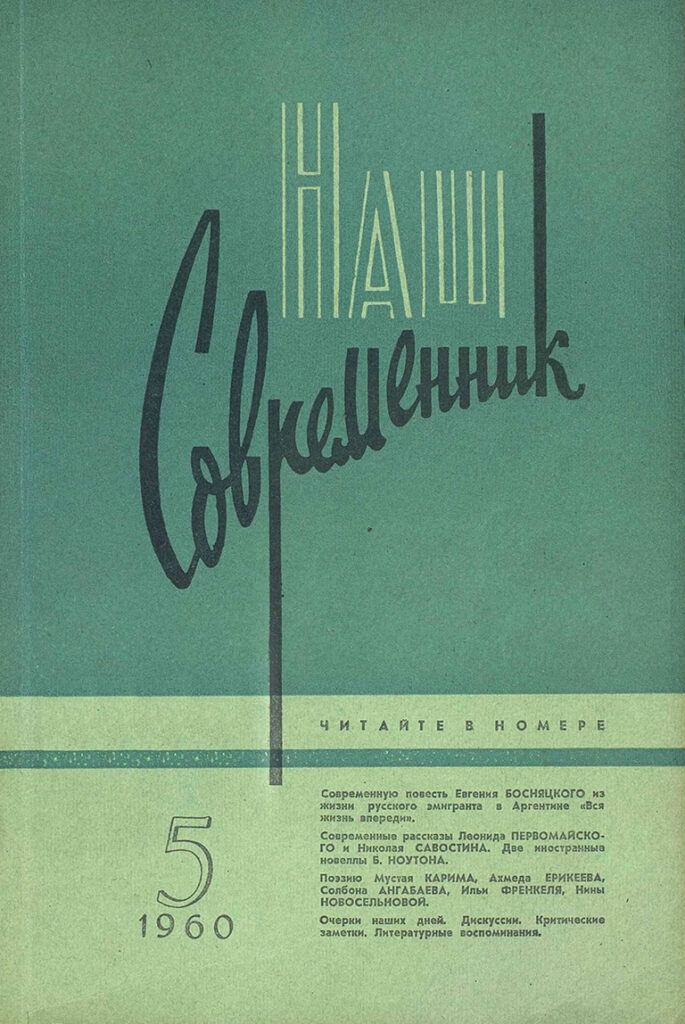
Inhalt :: Content Online-Servive mit Zugang zu sämtlichen Ausgaben der unter dem Dach des Schriftstellerverbandes der RSFSR veröffentlichten Literaturzeitschrift „Nash Sovremennik“ (seit 1956) und der Vorgängers „Alʹmanakh“ (1933-1955, ausgesetzt 1940-1947) im kombinierten Volltext- und Faksimileformat. „Nash Sovremennik“ gehört zu den „tolstye zhurnaly“ (dicken Zeitschriften) der Sowjetunion und gilt als wichtiger Träger ländlicher und provinzieller Literaturströmungen. Sie bot seit seiner Gründung eine Plattform für Autoren aus der russischen Glubinka und entfernten Regionen und wurde in den späten Sowjetjahren zu einem Sprachrohr des neo-slawophilen Konservatismus und Patriotismus, der sich aus ideologischen Gründen heftig gegen westliche politische und literarische Trends stellte. Abgedeckter Zeitraum: 1933 ff. Updates: jährlich. |
|
|
Verlag :: Publisher Infoteka |
|
|
Preis :: Price Preise auf Anfrage / Prices on request |
|
|
Das Angebot richtet sich nicht an Verbraucher i. S. d. § 13 BGB und Letztverbraucher i. S. d. PAngV. |
|
|
Bestellnummer bei digento :: digento order number 108919 |
|
|
Verlagsinformation :: Publisher's information Nash Sovremennik (Наш современник, Our Contemporary) was established in 1956 in Moscow on the basis of the Maxim Gorky-founded literary journal Al’manakh (Альманах, Almanac; pub. 1933–1955, suspended 1940–1947). One of the esteemed Soviet/Russian “thick journals,” Nash Sovremennik was published under the auspices of the RSFSR Union of Writers and was one of the most popular and well-respected Soviet literary periodicals. Unlike many of ist contemporary counterparts that tended to attract writers and young talent from a more urban intellectual setting, Nash Sovremennik was a pioneer in finding talent from the Russian glubinka and remote provinces, providing these writers with an important literary platform unavailable elsewhere. As a result, the journal came to be associated with the so-called “village” or “provincial prose,” with some of ist most important representatives being such writers as Fyodor Abramov, Viktor Astafyev, Vasily Belov, and Vasily Shukshin, among others. Though largely faithful to Marxist-Leninist precepts since ist founding, during the last years of the Soviet Union the journal underwent dramatic ideological reformulations, moving away from communist orthodoxy to Russian neo-Slavophile conservatism and patriotism that fiercely opposed Western political and literary trends on ideological grounds. At the height of ist popularity in the 1990s Nash Sovremennik would boast a circulation of nearly half a million copies. Led by Stanislav Kunyayev since 1989, the journal has become an important literary and journalistic vehicle for Russian conservatives and traditionalists, attracting such political and literary figures as Gennadi Zyuganov, Nikolay Ryzhkov, Sergey Kara-Murza, Aleksandr Prokhanov, Zakhar Prilepin, and the controversial late Metropolital Ioann (Snychev). The Nash Sovremennik Digital Archive includes all obtainable issues of Al’manakh and Nash Sovremennik published from 1933 on, with an additional year’s worth of content available for purchase on an annual basis. The archive offers scholars the most comprehensive collection available for this title, and features full page-level digitization and complete original graphics. The archive has searchable text and is cross-searchable with numerous other Infoteka digital resources.
|
|