|
Inhalt :: Content
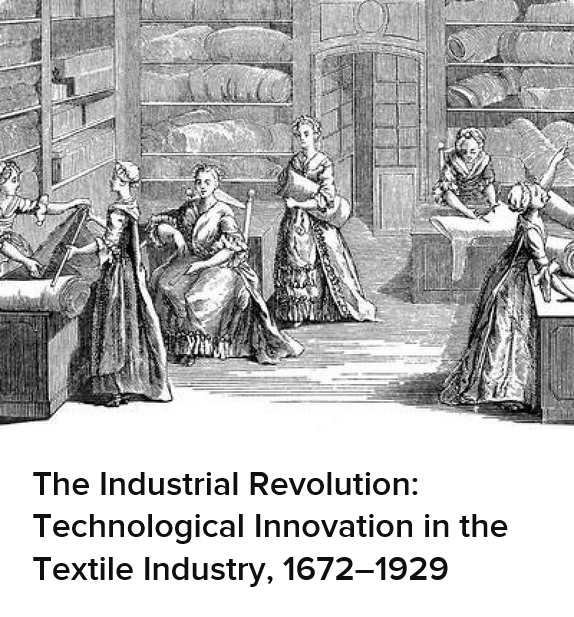
Online-Service mit Zugang zu einer Sammlung von Primärquellen, die die technologische und soziale Entwicklung der britischen Textilindustrie über mehr als zweieinhalb Jahrhunderte dokumentiert. Sie konzentriert sich primär auf zwei bedeutende Familien aus Bolton (Lancashire), die das Zentrum der industriellen Revolution in England bildeten:
-
Die Crompton-Papiere (1672–1929):
Im Mittelpunkt steht Samuel Crompton, der Erfinder der Spinning Mule (1779). Diese Maschine war ein Meilenstein, da sie die Vorteile der Spinning Jenny und der Water Frame kombinierte und es ermöglichte, extrem feines und dennoch starkes Garn in großen Mengen herzustellen. Die Dokumente umfassen insbesondere Korrespondenzen und Geschäftsbücher .
-
Die Heywood-Papiere (1799–1866):
Diese Unterlagen stammen von Robert Heywood, einem erfolgreichen Textilunternehmer. Sie bieten Einblicke in den internationalen Handel (z. B. Briefe aus Gibraltar und Jamaika) sowie in die politische Landschaft der Zeit, insbesondere die Unruhen der Chartisten-Bewegung.
|
|
|
Verlagsinformation :: Publisher's information
This collection traces the development of the Industrial Revolution in Britain through two prominent families connected to Bolton’s textile industry. The Crompton family were significant due to Samuel Crompton’s invention of the spinning mule in 1779, an innovation which allowed massive productivity when producing textiles on a grand scale. The Heywoods became famous through Robert Heywood, who used his successful textile business to launch a political career during the rise of the Chartist movement.
Correspondence between key figures amongst the family and their respective businesses make up the bulk of the collection. The collection also includes property descriptions and valuations, newspaper cuttings, and travel journals. Overall, these papers provide a useful look at the social, political, and economic impact of the Industrial Revolution in Northern England.
The Crompton papers, 1672-1929
The Crompton papers are arranged chronologically. About half the documents date from the lifetime of Samuel Crompton, though relatively few are from the pre-1790 period. The emphasis, therefore, is on the later part of Crompton's lifetime when the mule had become the dominant spinning machine and Crompton had been left a widower, with five sons and a daughter to bring up. Most of the remaining documents cover the years up to 1860 and provide insights into activities associated with Crompton's commemoration, as well as into the business concerns of his sons. Letters predominate in the archive. Bills and accounts concerning both business and domestic transactions are also well represented in the archive. Amongst other items are newspaper cuttings, which mostly relate to Crompton's commemoration, and property descriptions and valuations.
The Heywood papers, 1799-1866
The Heywood papers are arranged thematically. Part 1 contains correspondence from 1808-1820, mostly business letters of John and Robert Heywood (of Heywood and Son quilting manufacturers), principally from their business contacts in London, Manchester, Liverpool, Gibraltar, and Jamaica (Montego Bay). Part 2 contains correspondence consisting chiefly of letters from political and other associates of Robert Heywood. Including several items regarding the Chartist movement and riot of 1838 and other contemporary political issues such as the abolition movement and the abolition of the slave trade (1808), the anti-corn law movement, and, in international politics, the American Civil War and the impact that it may have on transatlantic trade. And Part 3 includes Robert Heywood's travel Journals and the correspondence and papers which relate to those trips. It also contains miscellaneous additional travel-related papers such as letters on friends' travels in Europe.
|


