|
|
|||
Molodaia Gvardiia Digital Archive (1922 to present) |
Kontakt/Bestellung
Contact/Order: info@digento.de 
|
|
Online |
|
|
Verlag :: Publisher Infoteka |
|
|
Preis :: Price Preise auf Anfrage / Prices on request |
|
|
Das Angebot richtet sich nicht an Verbraucher i. S. d. § 13 BGB und Letztverbraucher i. S. d. PAngV. |
|
|
Bestellnummer bei digento :: digento order number 109095 |
|
|
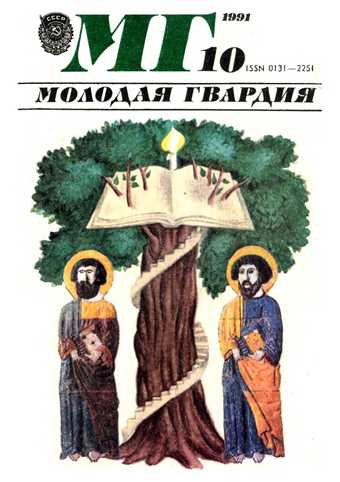
Verlagsinformation :: Publisher's information Founded in Moscow in 1922 as the official monthly organ of the Central Committee of the Komsomol, Molodaia Gvardiia (Молодая гвардия, Young Guard) was established to shape Soviet youth through a powerful fusion of literature, ideology, and political commentary. One of the esteemed Soviet/Russian “thick journals,” Molodaia Gvardiia has published continuously since 1922 except during the war years (1942–1947), when it was suspended and later issued as a literary almanac. The journal resumed regular publication in 1956 and has retained ist monthly frequency ever since. From ist early years, Molodaia Gvardiia served as a cultural training ground for aspiring Soviet writers and political thinkers, with early works by figures like Osip Mandelstam and Mikhail Sholokhov. Over the decades, it played a central role in shaping what would later be known as Russophile discourse, particularly during and after the Khrushchev Thaw. In the post-war decades, the journal came to be associated with a nationalist and traditionalist line. During the Gorbachev years, Molodaia Gvardiia was among the few Soviet journals that openly resisted perestroika, becoming a voice for those opposed to liberalization. Though ist audience has diminished in the post-Soviet period, Molodaia Gvardiia remains a living institution of Russian conservative thought and literary life. Since 2009, it has been edited by Valerii Khatushin and continues to be published monthly in Moscow. The Molodaia Gvardiia Digital Archive provides researchers, students, and historians with a unique window into Soviet and post-Soviet cultural and ideological dynamics, spanning a century of literary evolution, political debate, and generational change. Users can trace the journal’s transformation over time: from ist foundational role in Soviet youth mobilization and ist post-war embrace of conservative, Russophile thought, to ist defiant stance during the Gorbachev era and continued relevance in contemporary Russian discourse. This comprehensive resource includes fully searchable scans of every issue, preserving the visual and textual richness of the original print editions. The archive offers scholars the most comprehensive collection available for this title, with an additional year’s worth of content available for purchase on an annual basis. The archive is cross-searchable with numerous other Infoteka digital resources.
Key Stats
|
|