|
|
|||
Iunost' Digital Archive (1955 to Present) |
Kontakt/Bestellung
Contact/Order: info@digento.de 
|
|
Online |
|
|
Verlag :: Publisher Infoteka |
|
|
Preis :: Price Preise auf Anfrage / Prices on request |
|
|
Das Angebot richtet sich nicht an Verbraucher i. S. d. § 13 BGB und Letztverbraucher i. S. d. PAngV. |
|
|
Bestellnummer bei digento :: digento order number 109097 |
|
|
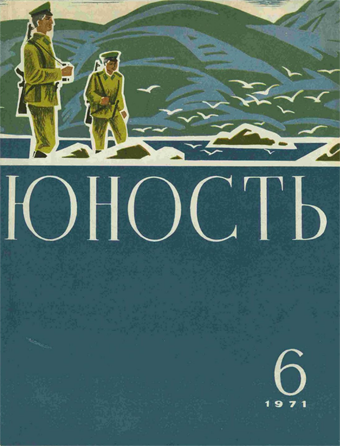
Verlagsinformation :: Publisher's information Founded in Moscow in 1955 at the initiative of writer Valentin Kataev, Iunost’ (Юность, Youth) was one of the most influential Soviet and later Russian illustrated literary journals addressed to younger readers, as well as one of the esteemed Soviet/Russian “thick journals.” During the cultural “Thaw,” Iunost’ emerged as an important venue for new literary voices and for writing that departed from established conventions of socialist realism. Its pages introduced readers to a remarkable generation of authors, including Vasily Aksenov, Anatoly Gladilin, Bella Akhmadulina, Andrei Voznesensky, Yevgeny Yevtushenko, Bulat Okudzhava, Fazil Iskander, Boris Vasilyev, Vladimir Voinovich, and many others. The Iunost’ Digital Archive provides scholars with a rich primary-source record of Soviet and post-Soviet literary culture, youth identity, intellectual life, and changing boundaries of permissible expression. Beyond fiction and poetry, the journal engaged with contemporary society through writing on science and technology, sports, popular culture, art, and public debate. Its illustrated format, color art inserts, humor sections, and discussion forums make it a valuable resource not only for literary studies, but also for research in Soviet cultural history, media studies, visual culture, youth studies, censorship, and the history of everyday life. For academic libraries, the Iunost’ Digital Archive offers access to a publication that helped shape the literary and cultural experience of multiple generations. The archive enables researchers and students to trace the emergence of major authors, examine literary experimentation during the Thaw and later Soviet decades, study the interaction between cultural liberalization and political constraint, and follow the journal’s continued evolution after 1991 as an independent Russian literary publication. As a sustained record of literary discovery, cultural change, and youth-oriented public discourse, the archive is an essential addition to collections supporting Slavic studies, Russian literature, Soviet history, and modern European cultural research.
Key Stats
|
|