Startseite - Home

Katalog
Catalogue

eBooks

Verlage
Publishers

Startseite :: Home
Kontakt :: Contact
Über uns :: About us
Datenschutz :: Privacy Policy
Impressum :: Imprint
Kundeninformation

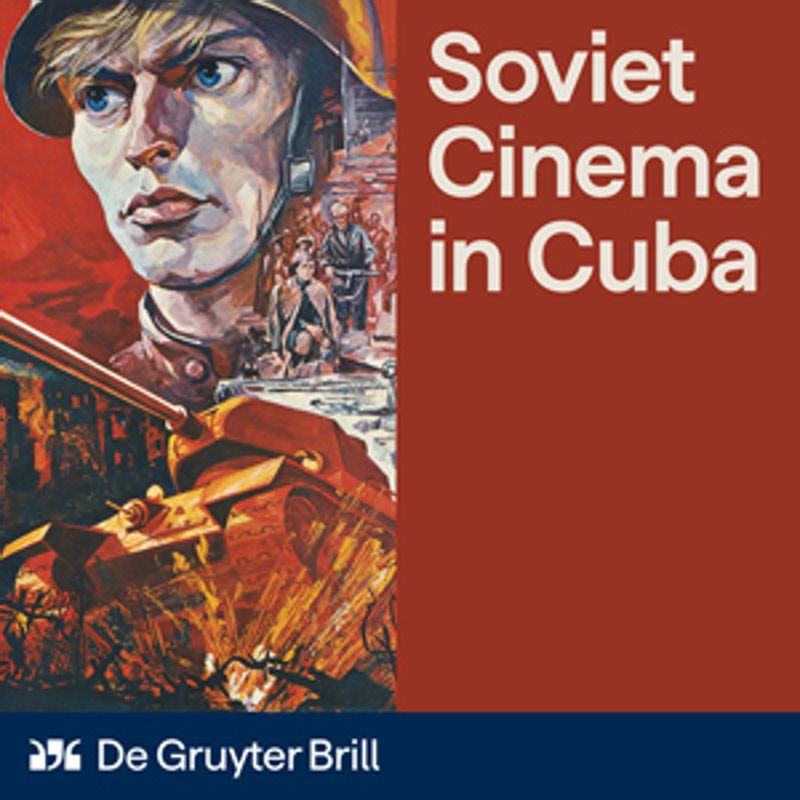
Soviet Cinema in Cuba: Reception, Influence, Legacy

Kontakt/Bestellung
Contact/Order:

Contact/Order: info@digento.de

Online

Inhalt :: Content

Online-Service mit Zugang Quellenmaterialien aus dem sowjetischen und osteuropäischen Filmarchiv der Cinemateca de Cuba in Havanna. Die Datenbank beinhaltet digitale Mappen zu über 1.600 Filmen, darunter über 700 sowjetische Filme sowie rund 900 Filme aus anderen Ostblock-Staaten, Jugoslawien, China und Nordkorea.Die Materialien reichen vom ältesten Film (Vater Sergius, 1917) bis 1990, wobei der Schwerpunkt auf der Ära vom späten 1950er- bis zum späten 1980er-Jahren liegt. Die Mappen enthalten sind historische Presseausschnitte aus kubanischen und internationalen Zeitungen/Zeitschriften) Werbematerialien von Verleihern, maschinengeschriebene Archivdokumente sowie rund 35.000 ganzseitige Farbabbildungen. Die Dokumente sind überwiegend auf Spanisch verfasst, beinhalten aber auch französische, deutsche, englische und russische Texte.

Soviet Cinema in Cuba: Reception, Influence, Legacy

Verlag :: Publisher

Walter de Gruyter

Preis :: Price

Preise auf Anfrage / Prices on request

Das Angebot richtet sich nicht an Verbraucher i. S. d. § 13 BGB und Letztverbraucher i. S. d. PAngV.

ISBN/ISSN

3118-2127

Bestellnummer bei digento :: digento order number

109408

Verlagsinformation :: Publisher's information

Of all the arts, cinema is the most important". Lenin’s famous remark about twentieth-century art resonated widely after the 1917 October Revolution.

In distant Cuba, the Cuban Revolution of January 1959 ushered in a new cinematography, conceived from the outset as a true art form. This marked a watershed moment in the island's approach to cinema. The first classics emerged—early works by great masters who would quickly gain worldwide acclaim. The soon-to-be-famous Cuban film posters set the tone for a new graphic style, and filmmakers went in search for a common language influenced by Italian neorealism, the French New Wave, and the New Latin American Cinema. In those early years, these explorations had not yet consolidated into a cinematic movement. Soon, however, these ripples would turn into a wave that would engulf the entire continent.

Before long, Cuba itself became flooded with Soviet films, shown in its many theatres. Audiences were introduced to previously unknown directors and actors and went to see numerous movies about World War II, which produced an impressive filmography. Some works had great merit and even conquered the world—suffice it to mention The Cranes Are Flying (1957) by Mikhail Kalatozov. Only a few years later, this pioneering filmmaker traversed the entire island to shoot I Am Cuba, which became an international cult classic.

Socialist Realism
Throughout its existence, Soviet cinema explored such wide-ranging topics as theater, literature, science fiction, war, and anti-fascism. Standing on the shoulders of such giants as Sergei Eisenstein, Vsevolod Pudovkin, and Oleksandr Dovzhenko, a younger generation developed the cinematic language of Socialist Realism, the official artistic doctrine that regulated Soviet cinema throughout the Stalin era. Films in this period propagated heroic workers, revolutionary struggle, collective action, and optimism about socialism. Of course, it wasn’t always smooth sailing, and some films were questioned, or even banned, upon their release, such as The Commissar (1967) by Aleksandr Askoldov and Repentance (1984) by Tengiz Abuladze, only to be rediscovered many years later.

Soviet Influences
Alongside Soviet cinema, with its specific traits and distinct path of development, in Cuba a new generation burst onto the scene with its own language and outstanding films, triumphing at international festivals. These filmmakers absorbed and adapted everything from literary and theatrical classics to Yuri Ozerov's epic film Liberation (1969–1971), contemporary conflicts, a documentary work such as Ordinary Fascism by Mikhail Romm, or the lyricism of Romance for Lovers, directed by Andrei Mikhalkov-Konchalovsky. While it would be false to claim that Soviet cinema exerted a decisive influence on Cuban cinematography, it had an undeniable impact on a number of filmmakers who internalized the mastery of the Soviet classics and their treatment of contemporary issues.

Contents
The present collection gives unique access to the Soviet film archive kept at the Cinemateca in Havana, Cuba. The archive contains folders for over sixteen hundred movies. These folders contain press clippings from both Cuban and foreign newspapers and periodicals, promotional materials from distributors, and typewritten archival documents. Over seven hundred folders deal with Soviet films, but the archive also includes almost nine hundred folders about films produced in the countries of the Eastern Bloc as well as some folders on countries such as Yugoslavia, China, and North Korea. The oldest movie in the collection is Father Sergius of 1917, the most recent ones are from 1990. The bulk of the material is from the late 1950s to the late 1980s. Due to its size and diversity, this is likely the most complete archive on Soviet cinema outside present-day Russia.


Publisher’s Note
The collection contains folders about movies for which there is no content. However, these movies were screened in Cuba, and for this reason we kept them in the database.

At a glance

  • Files for over 1,600 movies produced in the USSR, the Eastern Bloc, and elsewhere
  • Reviews, promotional materials, and archival sources
  • Ca. 35,000 full-color images
  • Full-text search functionality
  • The most complete archive on Soviet cinema outside present-day Russia
  • Documents predominantly in Spanish but also in French, German, English and Russian
  • Allowing for the study of reception, circulation, and cross-cultural influence
  • Scanned from the originals kept at the Cinemateca de Cuba, Havana
Nach oben